




Speed Camera Detector Accuracy: How Precise Are Modern Warning Systems Really?
Speed camera detectors warn drivers about fixed and mobile cameras along their route while driving. For this to work effectively — and for drivers to react in time — these systems must be able to determine the vehicle’s position with accuracy down to just a few metres.
Reliability of alerts is equally important. Nothing is more frustrating than receiving a fine despite using a detector. On the other hand, constant alerts with no camera in sight quickly become annoying.
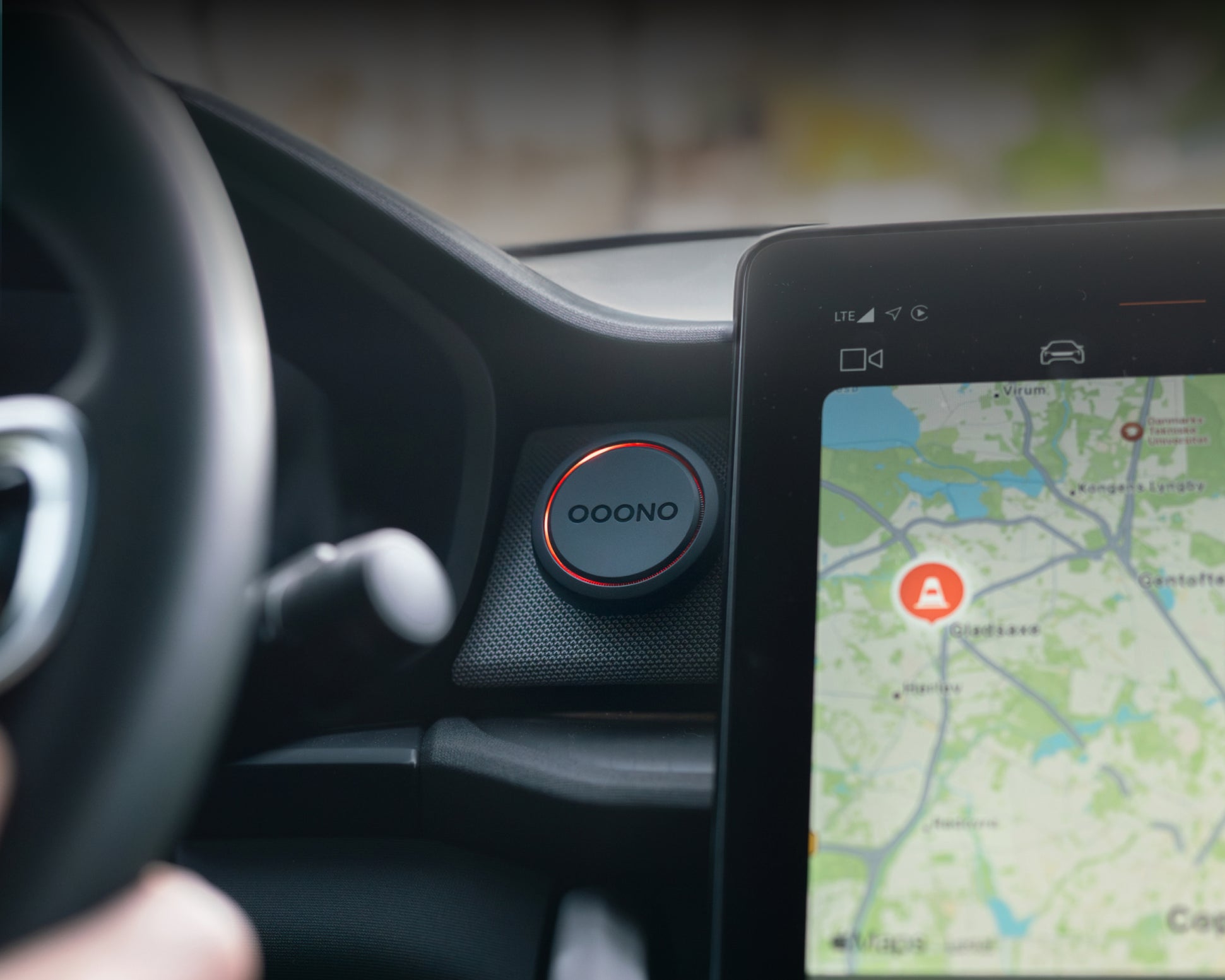
In this article, we take a closer look at modern GPS systems, the difference between database-based and real-time data, and why the OOONO CO-DRIVER is the preferred warning system for many drivers.
Learn more in our overview of the best speed camera detector solutions.
What Does Accuracy Mean for a Speed Camera Detector?
When experts talk about speed camera detector accuracy, they are referring to two key factors that must work together:
- GPS positioning accuracy: How precisely does the system know your current location? Modern GPS chips achieve around 5–10 metres accuracy on motorways.
- Database freshness: How up-to-date and complete is the speed camera database? Even perfect GPS is useless with outdated data — and vice versa.
Only the combination of both ensures reliable alerts. OOONO combines precise GPS positioning with community-powered reports that are updated in real time.
GPS Precision: 5–10 Metres on Motorways and Major Roads
Modern GPS systems can determine a position with 3–5 metres accuracy under open sky conditions. In urban areas with tall buildings, this can decrease to 10–15 metres. But does it still work at high speeds? The short answer: yes.
The slightly longer explanation: A GPS receiver calculates its position using signals from at least four satellites simultaneously. The more satellites visible, the more accurate the result. Modern detectors like the OOONO CO-DRIVER also use A-GPS (Assisted GPS), reducing positioning time to under two seconds — crucial for timely alerts at motorway speeds.
Practical example: At 130 km/h, a car travels around 36 metres per second. An accuracy of 5–10 metres means alerts are triggered within just a few car lengths — precise enough to react comfortably and safely.
Detection Technology: GPS vs. Radar vs. Laser
| Technology | How it works | Legal status (Germany) | Accuracy |
|---|---|---|---|
| GPS-based (e.g. OOONO CO-DRIVER) | Matches current position with camera database | Legal (with restrictions) | Approx. 5–10 m |
| Radar detectors | Receives radar signals from speed cameras | Illegal (§ 23 StVO) | Variable, depends on signal |
| Laser detectors | Detects laser measurement beams | Illegal (§ 23 StVO) | Often too late — measurement already done |
| Static database (outdated) | Fixed GPS list without live updates | Legal | Good for fixed cameras, poor for mobile |
Conclusion: GPS community-based systems like the OOONO CO-DRIVER offer the only combination of legality, high accuracy, and real-time updates.
See a direct comparison here: OOONO vs. Saphe.
Real-Time Traffic Alerts: How Reliable Is Community Data?
The key differentiator of modern speed camera detectors is no longer the GPS hardware — it’s already highly advanced across all major brands. The real difference lies in the quality and freshness of the data.
Community Verification: How OOONO Filters False Reports
OOONO combines a large traffic database with the power of its user community. CO-DRIVER users can report mobile cameras at the press of a button.
To avoid outdated or false reports, OOONO uses a multi-step verification process: A new report is only shown as an active alert once multiple independent users confirm the same location within a short time frame.
If confirmation is missing — for example, if a mobile unit has moved on — the alert is automatically removed. With more than 4 million users, alerts are fast, relevant, and reliable across Europe.
Result: OOONO’s false-positive rate is significantly lower than systems relying on static databases. Fewer false alerts mean drivers trust the warnings — increasing real-world effectiveness.
Database Update Frequency: Daily vs. Yearly
Traditional detectors with built-in databases are typically updated monthly or even yearly via PC software or paid subscriptions.
In the meantime, new fixed cameras or mobile checks may appear without the system knowing.
OOONO’s database, by contrast, updates in real time — 24/7. Every new mobile camera is quickly shared with all nearby users.
Frequently Asked Questions (FAQ)
How accurate are speed camera detectors in practice?
Modern GPS-based detectors achieve around 5–10 metres accuracy on motorways and major roads. However, real-world reliability depends heavily on how up-to-date the database is — where OOONO has a clear advantage with real-time community data.
Does OOONO detect mobile speed cameras?
Yes — this is one of its biggest strengths. Mobile cameras, as well as hazards like traffic jams and roadworks, are reported and verified in real time by the community.
Within seconds of a report, nearby users receive alerts — even if the camera has only just been set up.
What is the false-positive rate and why does it matter?
A false positive is an alert triggered when no camera is present. High false-positive rates lead drivers to ignore warnings.
OOONO reduces false alerts through multi-step community verification — alerts are only triggered after multiple confirmations.
Is 5–10 metre GPS accuracy sufficient for everyday driving?
Yes — and very comfortably so. At 100 km/h, 10 metres corresponds to a reaction time of about 0.36 seconds. Alerts are also triggered 200–300 metres in advance, allowing safe and smooth reactions.
Conclusion: Speed Camera Detector Accuracy — What Really Matters
The GPS hardware in modern detectors is already highly capable. What truly matters today is the quality of the underlying database: how current it is, how well it filters false reports, and how large the user community is.
With more than 4 million devices sold, the OOONO CO-DRIVER is one of Europe’s most widely used traffic alert systems. Real-time updates, multi-step verification, and a large active user base make it a top choice for modern drivers.
Learn more here: Speed camera detector costs and buying guide.
Try OOONO CO-DRIVER today — precise alerts, one-time purchase, no subscription. 30-day money-back guarantee.