



Legal Ways to Avoid Speed Cameras in the UK: A Practical Guide
Speed cameras are everywhere on UK roads — and the fines for getting caught start at £100 plus three penalty points. The good news is that there are completely legal ways to protect yourself. From knowing the speed limits to using a GPS warning device, this guide covers everything UK drivers need to stay safe, legal and fine-free.
Know Your UK Speed Limits
The most effective way to avoid a speed camera is simply to know the limits. In the UK, default speed limits apply unless signs indicate otherwise:
| Road Type | Cars and Motorcycles | Cars Towing / Vans |
|---|---|---|
| Built-up areas | 20 or 30 mph | 20 or 30 mph |
| Single carriageway | 60 mph | 50 mph |
| Dual carriageway | 70 mph | 60 mph |
| Motorway | 70 mph | 60 mph |
Pay particular attention to 20 mph zones, which have expanded significantly across England and Wales in recent years, and to variable speed limits on smart motorways where overhead gantry signs can lower the limit at any time.
Use a Legal Speed Camera Warning Device
GPS-based speed camera warning devices and apps are fully legal in the UK. They work by alerting you to the location of known cameras — fixed, mobile and average-speed — giving you time to check your speed before you reach the enforcement point.
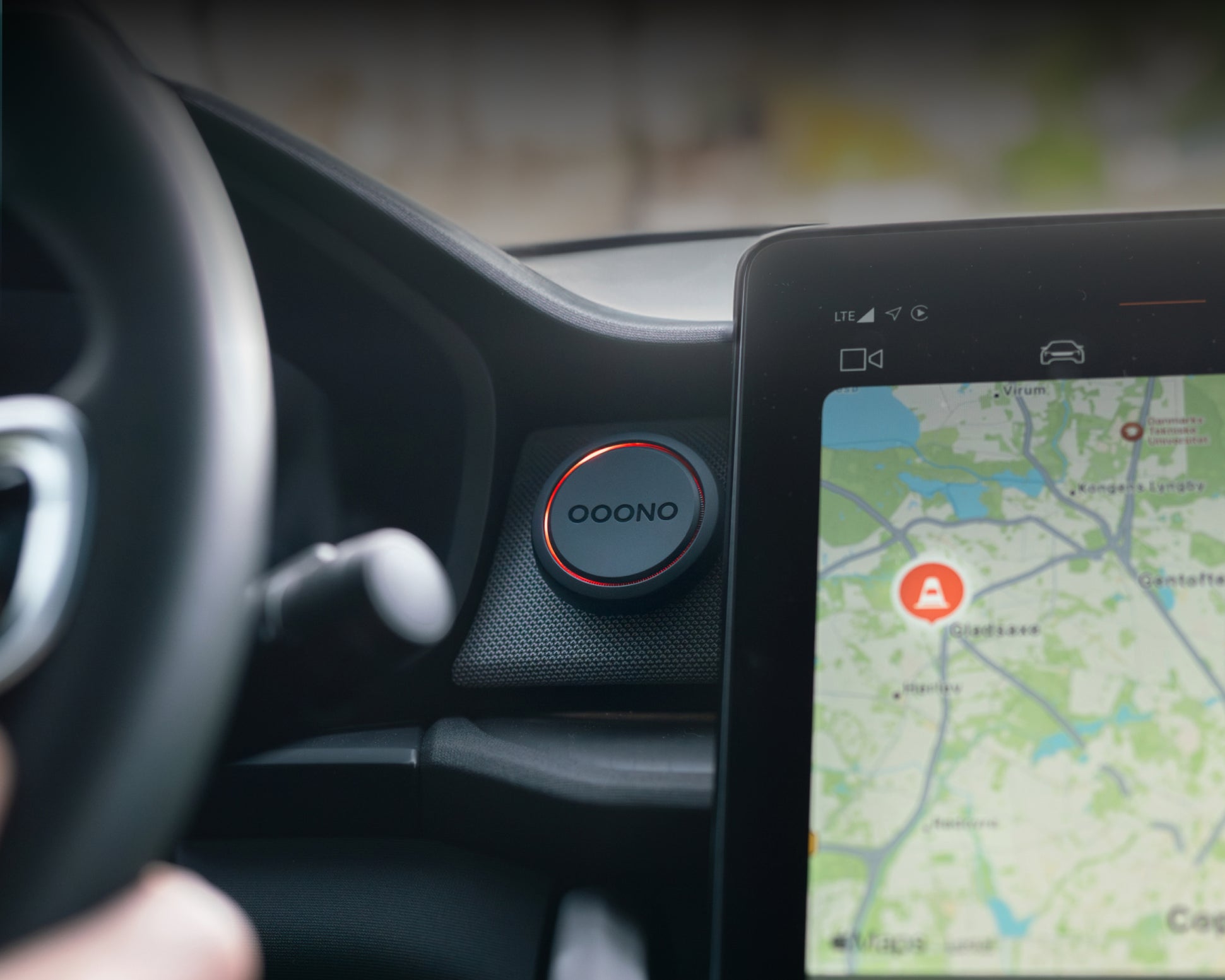
OOONO CO-DRIVER is the most accurate option for UK roads. Its community of millions of active drivers reports camera locations in real time, meaning you get warnings for mobile vans and temporary cameras that pre-loaded databases miss entirely.
- Fixed speed cameras: GATSO, SPECS, HADECS3 — all covered
- Mobile speed camera vans: reported live by the OOONO community
- Average speed zones (SPECS): full UK coverage
- Temporary roadworks cameras: community-reported as they appear
Understand How Different UK Speed Cameras Work
Knowing what each camera type does helps you understand why advance warnings matter:
| Camera Type | How It Works | OOONO Covers? |
|---|---|---|
| GATSO (fixed) | Rear-facing radar, triggers on speeding vehicles | Yes |
| SPECS (average speed) | Calculates average speed between two points | Yes |
| HADECS3 (smart motorway) | Monitors multiple lanes, variable limits | Yes |
| Mobile van | Officer-operated, can be anywhere | Yes — live community reports |
| Unmarked police car | No fixed position — driver discretion | Not applicable |
Speed Awareness Courses: The Legal Alternative to Points
If you are caught speeding at a level just above the limit — typically up to 10% plus 2 mph over — you may be offered a National Speed Awareness Course instead of a fixed penalty notice. Completing the course means no points on your licence and no fine, though you pay a course fee of around £100.
You can only attend a speed awareness course once every three years for the same offence type, so it is not a guaranteed fallback. The best strategy remains not triggering the camera in the first place.
Defensive Driving Habits That Reduce Your Risk
Beyond devices and apps, a few simple habits significantly reduce your exposure to speed cameras:
- Check your speedometer regularly — most drivers unconsciously creep above the limit on open roads.
- Leave earlier so you are not tempted to speed to make up time.
- Use cruise control on motorways to maintain a consistent, legal speed.
- Pay attention to repeater signs in 20 and 30 mph zones, especially after roadworks.
- Slow down when you see a camera warning — even if you believe you are within the limit.
What Happens If You Are Caught Speeding?
Understanding the penalty structure reinforces why prevention is worth the effort:
| Offence Level | Fine | Penalty Points | Possible Outcome |
|---|---|---|---|
| Band A (low level) | £100 | 3 points | Fixed penalty or speed awareness course |
| Band B (mid level) | Up to £1,000 | 4–6 points | Court summons possible |
| Band C (high level) | Up to £2,500 | 6 points | Disqualification possible |
| Motorway offences | Up to £2,500 | 6 points | Court summons likely |
Six or more penalty points within two years of passing your test results in automatic licence revocation. For established drivers, 12 points triggers a totting-up disqualification.
One detail many drivers overlook is the NPCC enforcement threshold. The National Police Chiefs' Council guidance suggests that officers typically refrain from prosecution unless a driver exceeds the limit by 10% plus 2 mph — meaning 35 mph in a 30 zone before formal action is likely. This is not a legal right to speed, but it does explain why fixed penalty notices are rarely issued for marginal violations.
More serious consequences begin when you ignore official notices: failing to return a Section 172 notice — which identifies the driver of a caught vehicle — within 28 days is itself a criminal offence carrying six penalty points and a fine of up to £1,000. A Notice of Intended Prosecution (NIP) is sent within 14 days of the offence; if it does not arrive and you were not stopped at the time, you may have grounds to challenge the penalty.
Frequently Asked Questions
Is it legal to use a speed camera warning app in the UK?
Yes — GPS-based speed camera warning apps and devices are fully legal in the UK. They inform you of camera locations without interfering with detection equipment. Only radar jammers are illegal under the Road Traffic Act 1988.
How far in advance does OOONO warn you before a speed camera?
OOONO CO-DRIVER typically alerts drivers 200 to 300 metres before a camera. At 60 mph, that gives you approximately 7 to 10 seconds to check and adjust your speed before reaching the enforcement point.
Can you get a speeding fine from a camera you did not see?
Yes. Many UK speed cameras — including average-speed SPECS systems — are not always clearly visible. A GPS warning device alerts you regardless of whether you can see the camera, which is precisely why community-based systems like OOONO are so valuable.
Do all UK speed cameras flash when they catch you?
No. Rear-facing GATSO cameras use a flash, but many modern cameras — including HADECS3 and average-speed systems — operate without any visible flash. You may not know you have been caught until the Notice of Intended Prosecution arrives in the post.
Stay Legal, Stay Informed
Avoiding speed cameras legally is straightforward: know the limits, drive to them, and use the tools available to stay informed. A GPS warning device like OOONO CO-DRIVER gives you real-time community intelligence on every camera type across the UK — so you are never caught out by a camera you did not know was there.
Combined with good driving habits and an understanding of the penalty system, it is entirely possible to drive thousands of miles across the UK without ever receiving a fixed penalty notice.